Mine Water Geochemistry and PHREEQC Modelling
- 2.5 days, November 24 – 26, 2025, Bochum, Germany
Course Material
- Only registered participants will get a link to the course material
Venue
The workshop will take place at THGA (Technische Hochschule Georg Agricola) in Bochum, Germany.
Programme
- Monday, November 24, 2025 (9:00 – 17:30)
Introduction
What is mining influenced water?
Master variables (pH, redox)
Pyrite weathering
Weathering kinetics and calculation example
Secondary minerals
Acidity/Alkalinity
Chemical thermodynamics - Tuesday, November 25, 2025 (9:00 – 17:30)
To get started – don’t forget to bring your own laptop
What is a “Model”?
Introduction to Thermodynamics
The Mine Water
Speciation Calculation
Equilibration Calculation with pure Phases
Mixing Calculation - Wednesday, November 26, 2025 (9:00 – 12:00)
Mining influenced water examples
Relevance of Mine Water Geochemistry
Geochemical reactions are essential for understanding the processes that take place during and after mining activities. Based on interactions between rock, oxygen, and mine water, the formation of characteristic secondary minerals will be explained. The course further introduces the mechanisms of disulfide oxidation together with approaches to mitigate acid mine drainage. In recent decades, increasing attention has been directed toward the chemistry of mine water, reflecting the complexity of its reactions and environmental consequences. Accordingly, this course addresses the problems of mine water in general and its chemical characteristics in particular.
What is PHREEQC?
PHREEQC version is a computer program (“code”) for simulating chemical reactions and transport processes in natural or polluted water, in laboratory experiments, or in industrial processes. It is based on the equilibrium chemistry of aqueous solutions interacting with minerals, gases, solid solutions, exchangers, and sorption surfaces, thus the acronym pH-REdox-EQuilibrium. Yet, the program has evolved to include the capability to model kinetic reactions and one-dimensional transport. Rate equations are completely user-specifiable in the form of Basic statements. Extensible chemical databases allow the application of the reaction, transport, and inverse-modelling capabilities to almost any chemical reaction that is recognized to influence rainwater, soil-water, groundwater, and surface-water quality.
PHREEQC can be used as a speciation program to calculate saturation indices, the distribution of aqueous species, and the density and specific conductance of specified solution composition. For calculating solute activities, PHREEQC uses ion-association, Pitzer, or SIT (Specific ion Interaction Theory) equations to account for the nonideality of aqueous solutions. Analytical data for mole balances can be defined for any valence state or combination of valence states for an element. Distribution of redox elements among their valence states can be based on a specified pe or any redox couple for which data are available. PHREEQC allows the concentration of an element to be adjusted to obtain equilibrium (or a specified saturation index or gas partial pressure) with a specified phase or to obtain charge balance. Solution compositions can be specified with a variety of concentration units1.
Course Description
This two-and-a-half-day course is suitable for beginners, as well as those with some prior experience of mine water and its geochemistry. Providing a thorough introduction to the fundamental chemical processes that govern mining-influenced water, it places a strong emphasis on the interplay between geochemical principles and chemical or thermodynamic modelling.
Participants will learn to recognise potential flaws or inconsistencies in water analyses, identify the main dissolved species determining a water’s composition and understand the mineral phases and geochemical controls responsible for the observed chemistry. The teaching approach combines conceptual foundations with practical demonstrations to show how geochemical knowledge can be translated into analytical and predictive skills.
Real-world examples form an integral part of the training. One exercise demonstrates how to model the mixing of waters from different sources, while another explores the potential negative impact of acidic mine drainage on the South African Sterkfontein caves. These case studies deepen understanding of geochemical processes and highlight the practical value of modelling as a tool for assessing water quality and supporting environmental decision-making.
By the end of the course, participants will have gained a solid grounding in mine water geochemistry and the confidence to apply basic modelling techniques to their own datasets and challenges.
Download and Installation
The course will use the latest graphical version of PHREEQC (Graphical User Interfaces – Windows 32-bit). Please download the software from here: https://water.usgs.gov/water-resources/software/PHREEQC and install it on your computer well before the course. You will receive additional instructions via e-mail after full payment of the course fees. In some rare cases, MS Windows opens Acrobat Reader instead of PHREEQC when double-clicking *.pqi or *.pqo files. In this case, follow the instructions there.
Costs & Registration
| November 24 – 26, 2025 | |
| THGA, Bochum, Germany | |
| 476 € (Regular delegate) | 238 € (Students) | 426 € (IMWA members) – including German VAT | |
| Course materials and drinks included in the price | |
| Christian Wolkersdorfer | |
| Click this link to register |
For enquiries, please send an e-mail to minewater@wolkersdorfer.info
About the lecturer
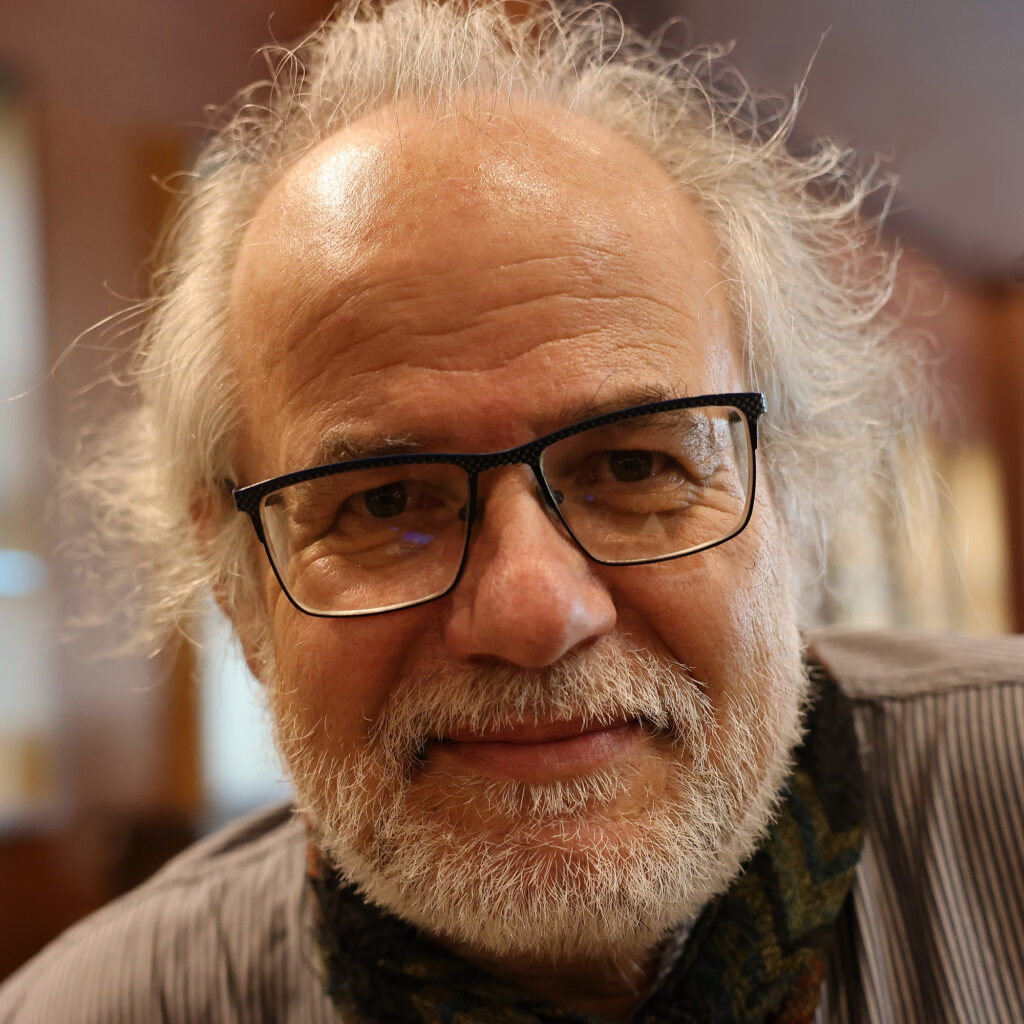
Prof. Dr habil. Christian Wolkersdorfer is a member of the Academy of Sciences South Africa (ASSAf) and has 34 years of professional experience. He is a mining and geothermal hydrogeologist specialising in mine water tracer tests, mine water geochemistry and remediation. Christian Wolkersdorfer currently holds a research chair in South Africa: South African Research Chair in Acid Mine Drainage Treatment at the Tshwane University of Technology in Pretoria. He has taught hydrogeology, mining hydrology and tracer hydrology at the Ludwig-Maximilians-University Munich and the Bergakademie Freiberg, Germany, and as part of the AEG Master’s programme at the University of Tübingen. He held the Industrial Research Chair in Mine Water Remediation and Management at Cape Breton University, Nova Scotia, Canada. He received his diploma and doctorate from the University of Clausthal, Germany, and habilitated at the Bergakademie Freiberg, Germany. Prof. Wolkersdorfer is a world leader in the field of mine water remediation and management, having conducted and initiated several projects related to mine water and hydrogeology in Canada, Germany, Austria, Slovenia, Brazil, the United Kingdom, South Africa, eSwatini, Slovakia, Finland, and Turkey. Prof Wolkersdorfer is also the technical editor of the journal “Mine Water and the Environment”, President of the International Mine Water Association (IMWA), Industry and Academia Coordinator for the Mine Water Division of the Water Institute of Southern Africa (WISA), a member of the Global Alliance and an honorary member of IMWA. He has published or edited over 230 articles and book chapters on mining, mine water, and hydrogeology.
1partly extracted from USGS web site